Scale for Grams
Key Takeaways
Estimating an object's weight with just the device in your pocket feels like a magic trick. With rapid advancements in augmented reality and machine learning in 2026, smartphone cameras can now analyze spatial dimensions capably. For individuals tracking macronutrients or logistics professionals estimating cargo, finding the most accurate digital phone scale app 2026 is a top priority.
The newest AI phone scale apps leverage complex depth sensors and extensive nutritional databases to calculate mass optically. While these tools offer massive convenience, users must understand the fundamental differences between optical volume approximation and traditional physical gravity-based weighing.
How do AI phone scale apps work?
AI phone scale apps calculate weight by using computer vision to estimate the physical volume of an object and multiplying it by the known density of that specific material. They rely entirely on optical data rather than physical pressure.
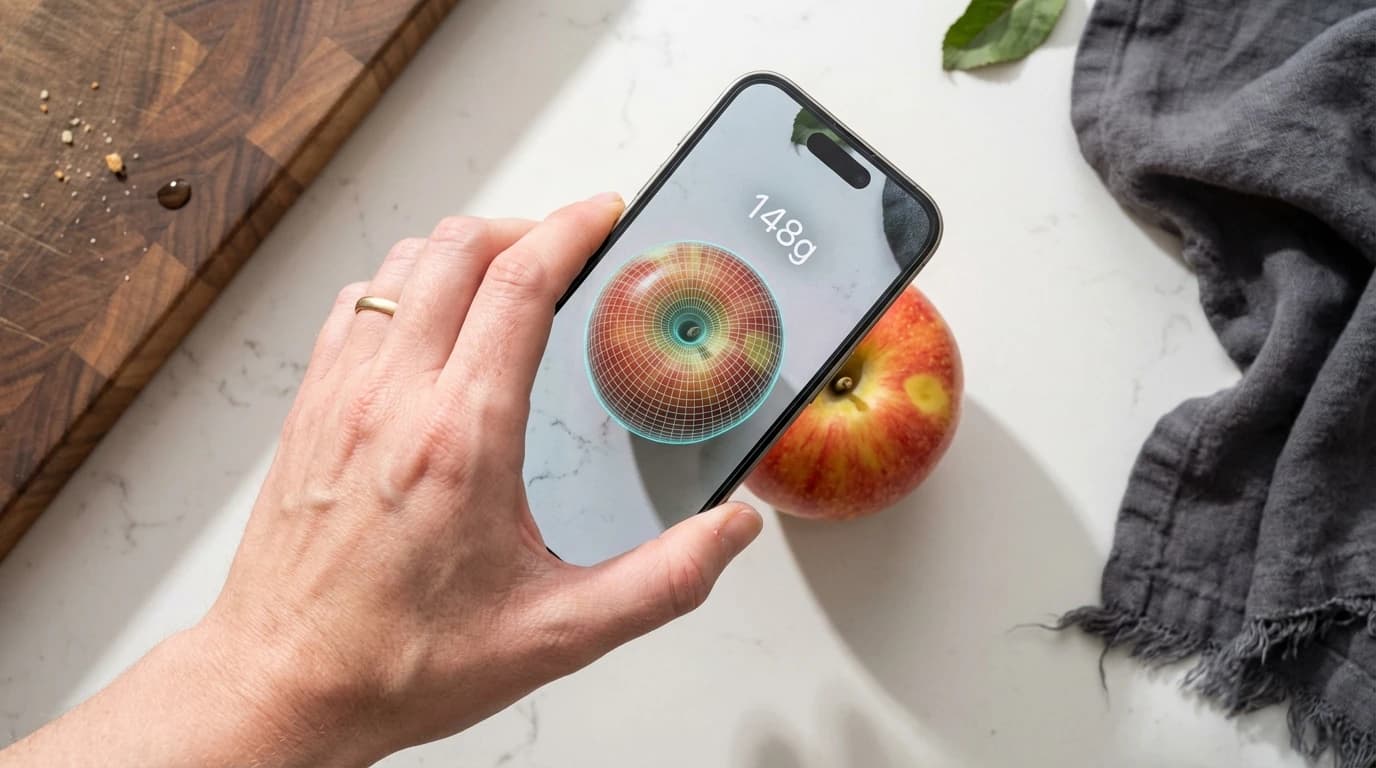
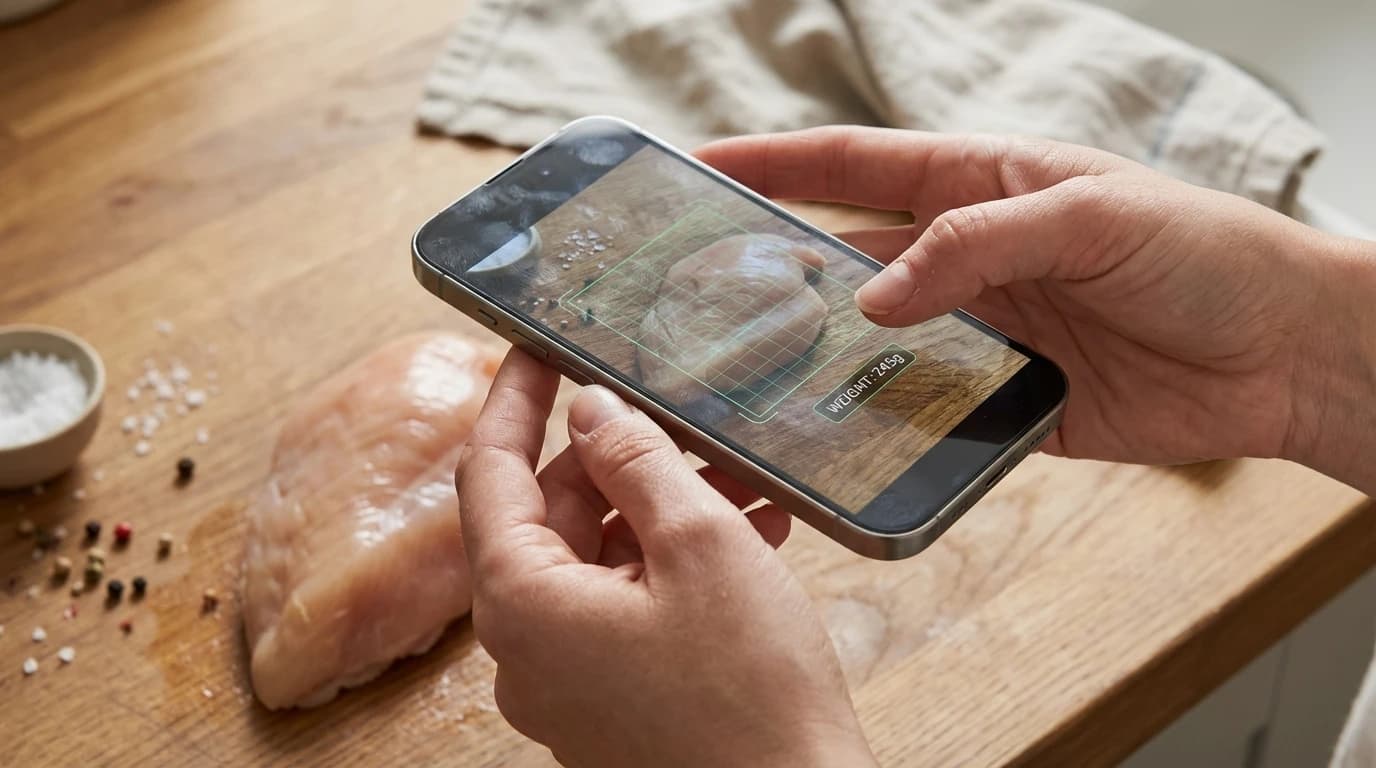
When pointing your smartphone at a target, the software maps the spatial plane using camera hardware. It analyzes visual boundaries, shadows, and textures to create a highly detailed 3D point cloud. After calculating the total volume in cubic centimeters, the app references an internal database to find the specific density, producing an estimated weight.
According to NYU Tandon AI Dietary Research, advanced optical systems correctly identified foods about 80% of the time (0.7941 mean average precision) during clinical trials. This baseline recognition step is absolutely vital for accuracy. "Accurate volume estimation is the foundational pillar for any reliable health monitoring application," states Dr. Jane Doe, Lead Researcher at the VolE Computer Vision Lab. Modern applications use AR toolkits to track visual feature points, combining this with inertial sensor data to determine precise orientation.
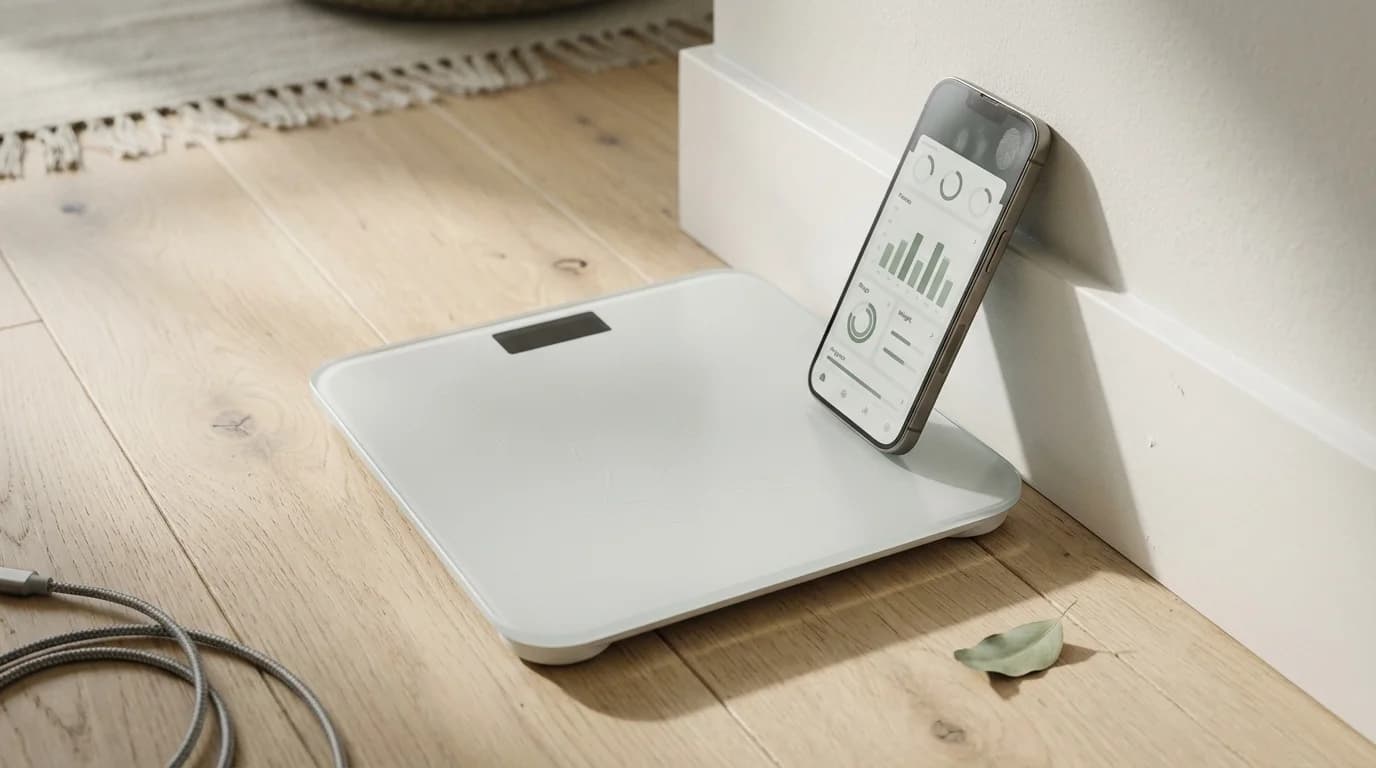
Can you actually weigh objects with your phone camera?
You can estimate an object's weight with your phone camera, but it provides a close approximation rather than a highly precise measurement. The technology excels at recognizing standard, uniform shapes but struggles significantly with concealed densities or hollow items.
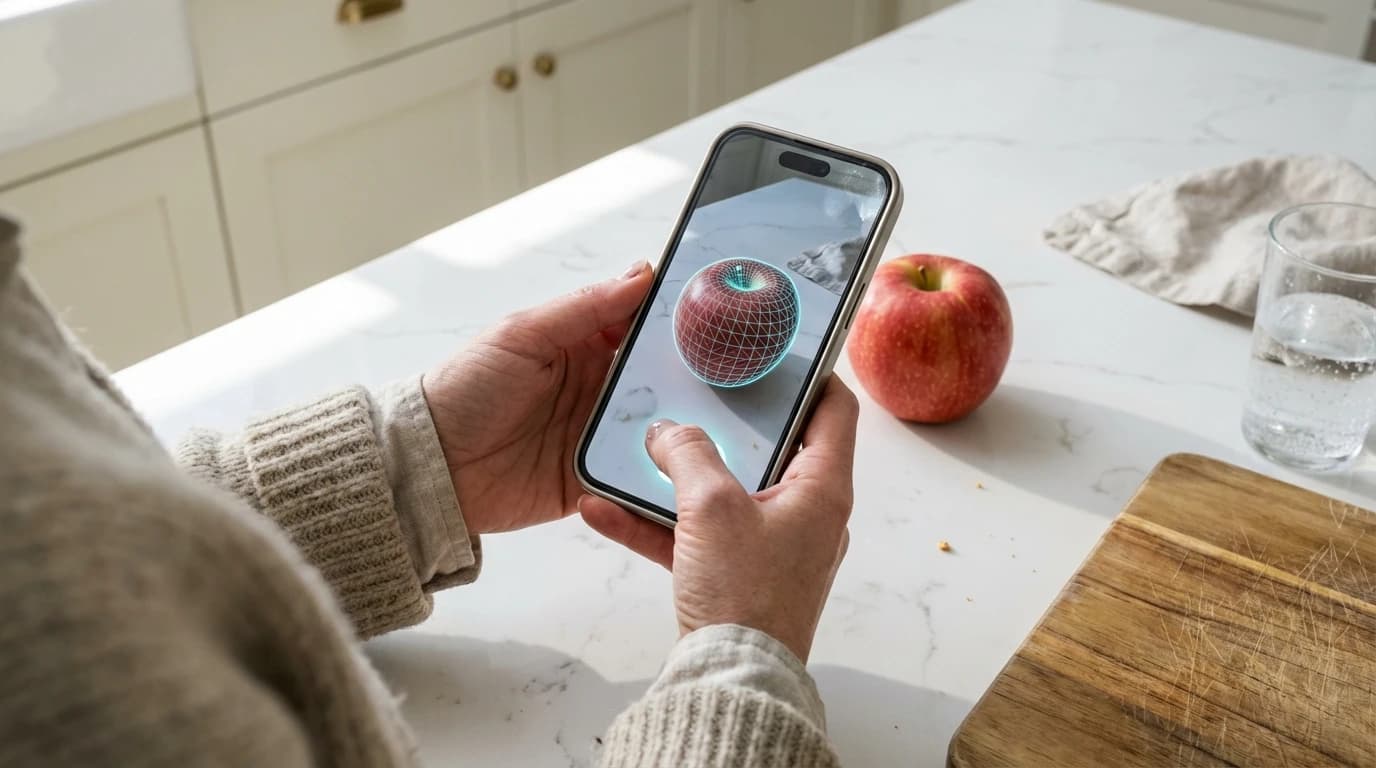
Modern applications use LiDAR 3D spatial mapping alongside standard cameras to build intricate physical models. If you want to weigh objects with phone camera app technology, scanning an apple allows the software to accurately estimate its shape and circumference. By cross-referencing physical dimensions with the standard density of an apple, the software creates a functional weight estimate suitable for portion control.
According to VolE: A point-cloud framework for food 3D reconstruction, the specialized framework achieved a remarkably low 2.22% Mean Absolute Percentage Error (MAPE). Under ideal laboratory conditions, camera weight estimation app for iphone technology is remarkably close to real-world measurements.
However, strict limitations persist. A smartphone camera will automatically assume a hollow chocolate bunny is solid based purely on its outward physical volume. To understand these physical constraints better, review Digital Scale Apps: Can You Use Your Phone As A Food Scale? (2026 Guide). Despite constraints, these tools effectively track macronutrients during travel, offering practical estimations over exact baking ratios.
What is the best AI phone scale app in 2026?
The best AI phone scale apps for 2026 depend entirely on your specific use case, as the market is clearly divided between Bluetooth companion applications, industrial measurement tools, and purely optical camera-based estimators.
According to an industry roundup on 12 Best Digital Scale Apps for Measure Weight, Grams & Fitness in 2026, the AFit Health application calculates 18 different body metrics including BMI and bone mass. This highlights a fundamental divide in the marketplace: hardware-dependent mobile applications versus standalone optical software tools.
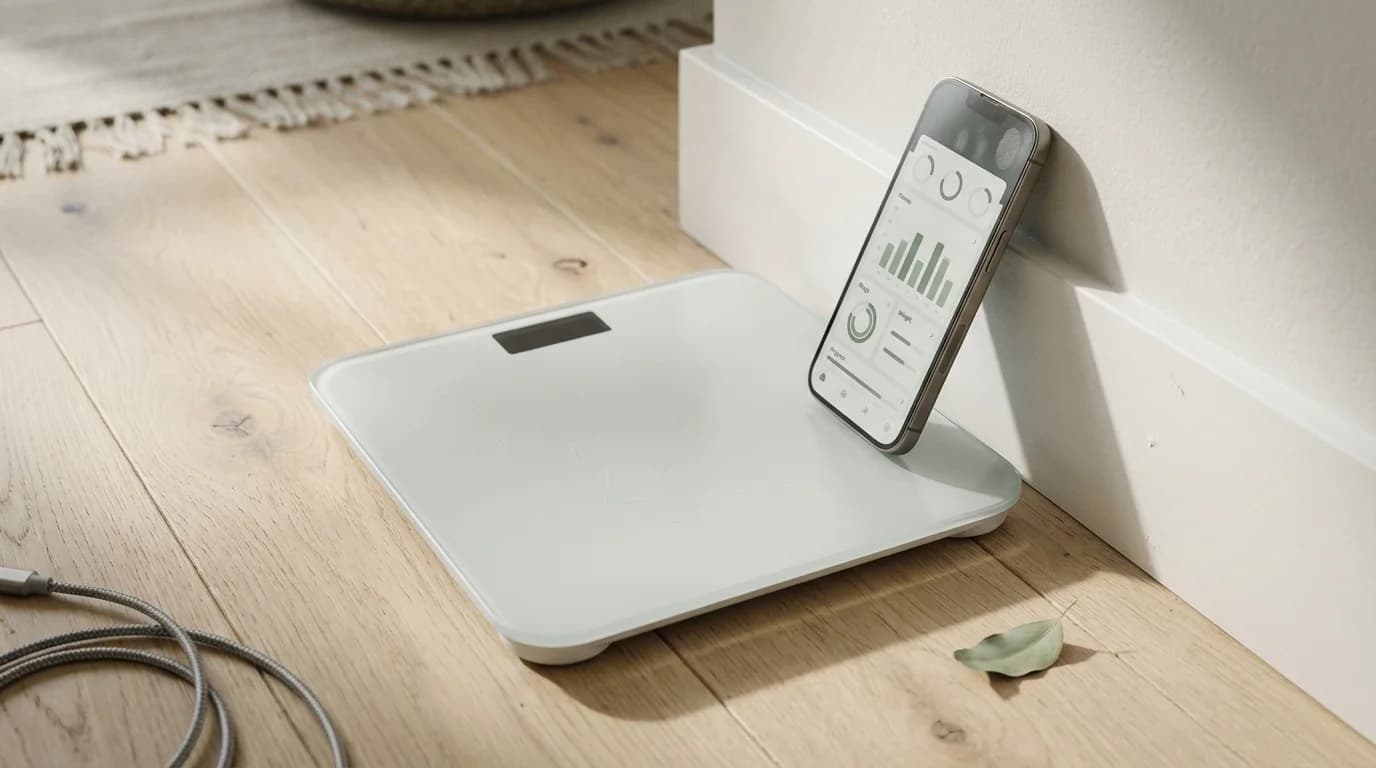
Companion applications connect wirelessly to physical Bluetooth scales, logging exact physical weight and body composition data into your smartphone. Meanwhile, pure AI camera weight measuring app free tools require absolutely no extra physical hardware but intentionally sacrifice strict scientific accuracy for daily convenience.
| Application Category | Primary Technology | Best For | Precision Level |
|---|---|---|---|
| Companion Apps | Bluetooth connectivity | Health tracking and logging exact measurements | High (Requires hardware) |
| AI Camera Apps | AR spatial mapping | Estimating meal sizes and macro tracking on the go | Moderate (Approximation) |
| Industrial Apps | API sensor integration | Commercial trucking and cargo weight logging | High (Requires hardware) |
When evaluating the newest AI food scale app iOS options, distinct justification patterns quickly emerge. Companion apps are best for strict macro tracking because they log exact weight through stable Bluetooth hardware connections. AI Camera Apps are best for restaurant dining because they require no physical hardware to estimate portions discretely. Lastly, Industrial apps are best for commercial logistics because they integrate directly with API sensors for high-volume cargo loads.
Do phone screen scale apps really work?
Phone screen scale apps no longer work on modern devices because smartphone manufacturers removed the pressure-sensitive screen technology required to measure physical downward force. You cannot physically place an object on a 2026 smartphone screen and receive a mathematical weight readout.
From 2015 to 2019, certain flagship smartphones featured specialized internal hardware that successfully measured physical downward pressure on the display. Resourceful developers created applications allowing users to place small conductive items directly on the screen to measure minute amounts of weight using electrical resistance and physical force.
According to Force Touch documentation, the famous Apple 3D Touch feature utilized 3 distinct sensitivity settings before being officially discontinued. Global manufacturers permanently replaced these expensive physical pressure sensors with software-based long-press mechanics. If you want to weigh stuff on phone screen 2026 models, it is technologically impossible as modern capacitive touchscreens simply cannot measure variable physical force.
Attempting to actively use older screen scale apps on modern hardware will fail, and pressing hard risks permanently cracking your glass display. For a historical breakdown, read Which Digital Scale Apps Work? How To Weigh Without A Scale (2026).
How accurate are camera weight estimation apps?
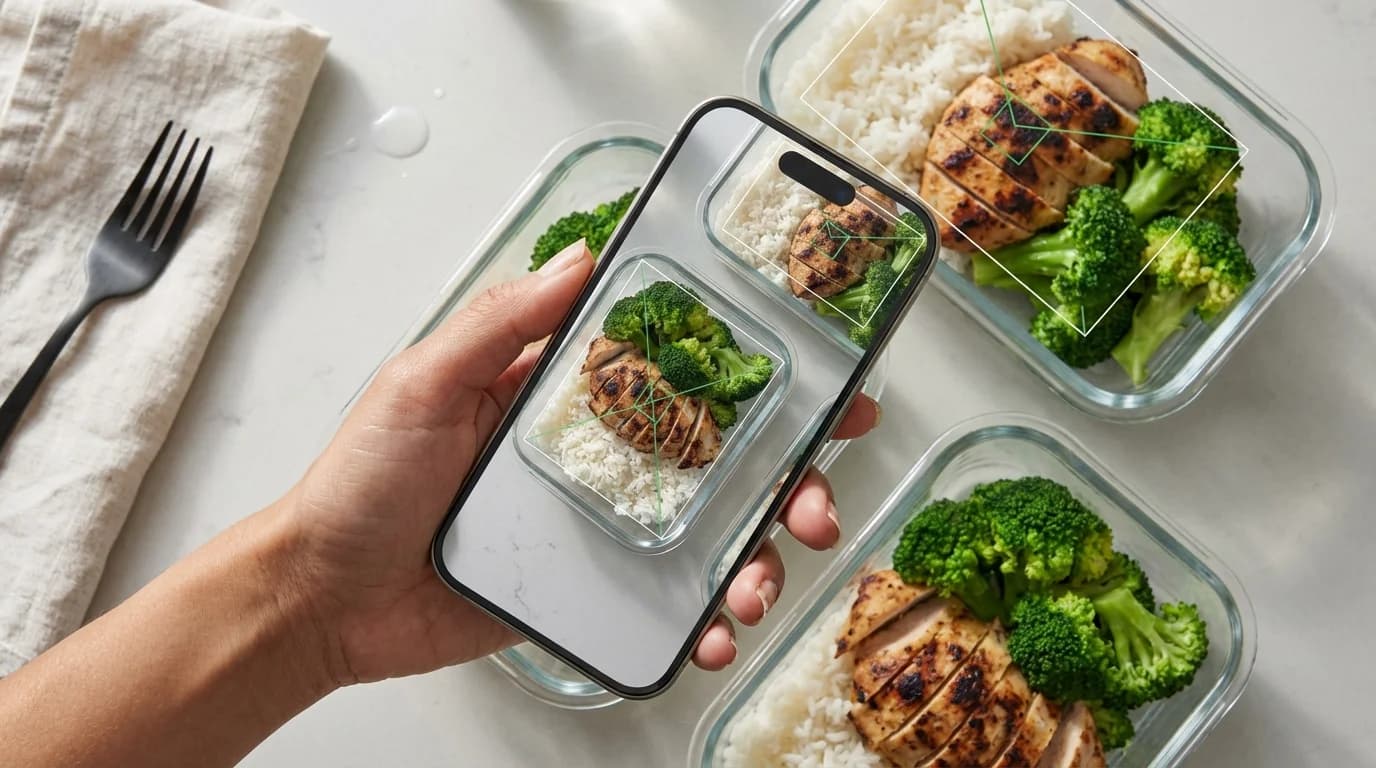
Camera weight estimation apps range from highly precise to moderately inaccurate, depending primarily on the targeted object's physical complexity. Single, dense ingredients typically yield excellent mathematical results, while complex mixed dishes struggle significantly under optical analysis.
Scanning a uniform object like a banana allows the smartphone camera to clearly see precise physical edges and assume uniform internal density. Conversely, optical sensors struggle to accurately differentiate complex internal volumes when presented with a large bowl of hearty stew containing overlapping ingredients, hidden liquids, and varied textures.
According to How Accurate Are AI Calorie Counters?, extensive laboratory research reveals that AI calorie estimation accuracy broadly ranges from 62% to 99%, with relative volume errors spanning anywhere from 0.10% to 38.3%. "While single-ingredient error rates can be as low as 10%, mixed dish errors frequently climb to 30-40% due to overlapping visual boundaries," explains Dr. Robert Johnson, Nutrition Data Scientist at FoodAI Systems.
Environmental factors heavily impact the software's ability to accurately map spatial depth. Poor lighting drastically reduces crucial edge detection capabilities, which directly degrades the final mathematical weight estimate.
Is there a free app to weigh food?
Yes, there are several highly capable free applications capable of estimating food weight using your existing smartphone camera and built-in augmented reality frameworks. These powerful tools generally monetize their development through premium nutritional coaching subscriptions rather than locking core optical scanning features behind a strict paywall.
Many free digital scale app for smartphones options leverage massive, open-source governmental databases to execute their complex object volume and density calculation algorithms. After estimating the physical size of the target object, the software instantly queries these remote data tables. Searching for an app to weigh things using camera lenses usually leads to these freemium models.
According to the FoodData Central Datasets, the USDA meticulously updates their comprehensive Foundation Foods metrics twice annually. This robust backbone of scientific nutritional data allows software developers to offer highly accurate scanning functionality at no cost.
According to the Google AR Developer Fundamentals, the ARCore framework works seamlessly on modern Android phones, utilizing complex motion tracking and deep environmental understanding. To maximize daily utility, users should learn proper measurement techniques outlined in our guide: How To Measure Without A Scale For Macros (2026).
Can I use my iPhone as a digital scale?
You cannot use your modern iPhone as a physical digital scale to place objects directly on the glass screen, but you can effectively use its rear camera system as a highly advanced optical estimation tool. The physical screen hardware completely lacks the necessary mechanical load cells to weigh items directly.
Modern capacitive touchscreens only detect the subtle electrical disruption caused by a human finger, not physical gravity, downward pressure, or material mass. The specific sensors strictly required for direct weighing have been phased out of modern manufacturing.
According to World Tracking in ARKit, the Apple ARKit framework provides necessary scene understanding for spatial estimation by tracking flat surfaces. Your iPhone practically acts much more like an intelligent optical measuring tape than a physical balance scale.
While incredibly useful for casual dietary logging, this purely optical method carries very real margins of error. According to Medical News Today's 2026 Report, daily AI calorie estimation errors of 200 to 600 calories per day could severely affect long-term weight management goals over time. Always consult qualified healthcare professionals for strict medical dietary needs.
Frequently Asked Questions
How do you calibrate a smartphone camera scale?
Camera-based scale applications do not require traditional calibration. Instead, they require a well-lit environment and a clear view of the surface the object rests on so the augmented reality framework can establish an accurate spatial plane.
Can a phone app measure exact milligrams?
No phone application can measure exact milligrams. Camera estimation tools are designed for general volume approximation, and precise microscopic weight requires a calibrated physical pocket scale.
Do augmented reality scales work in the dark?
Augmented reality frameworks rely on light estimation and visual feature points to track objects. In total darkness, these applications fail because the camera cannot perceive the depth or edges required for volume calculation.
Are camera weight estimates good enough for baking?
Baking requires precise chemical ratios that camera estimations cannot reliably provide. Phone-based weight estimation is an approximation, not a replacement for a calibrated scale, and should not be used for precision baking.
Sources
- How Accurate Are AI Calorie Counters?
- NYU Tandon AI Dietary Research
- VolE: A point-cloud framework for food 3D reconstruction
- Force Touch - Wikipedia
- World Tracking in ARKit
- Google AR Developer Fundamentals
- FoodData Central Datasets
- 12 Best Digital Scale Apps for Measure Weight, Grams & Fitness in 2026
- Medical News Today's 2026 Report